
Marketing in healthcare is tricky. It can be rigid due to existing structures in place (such as in-network referral guidelines) and/or due regulatory and compliance factors - however that doesn't mean that it can't be done.
Understanding which channel is important for which stage in the patient funnel is as important as the message, branding and tactics, otherwise it becomes the classic "shotgun" approach to fire and see what sticks.
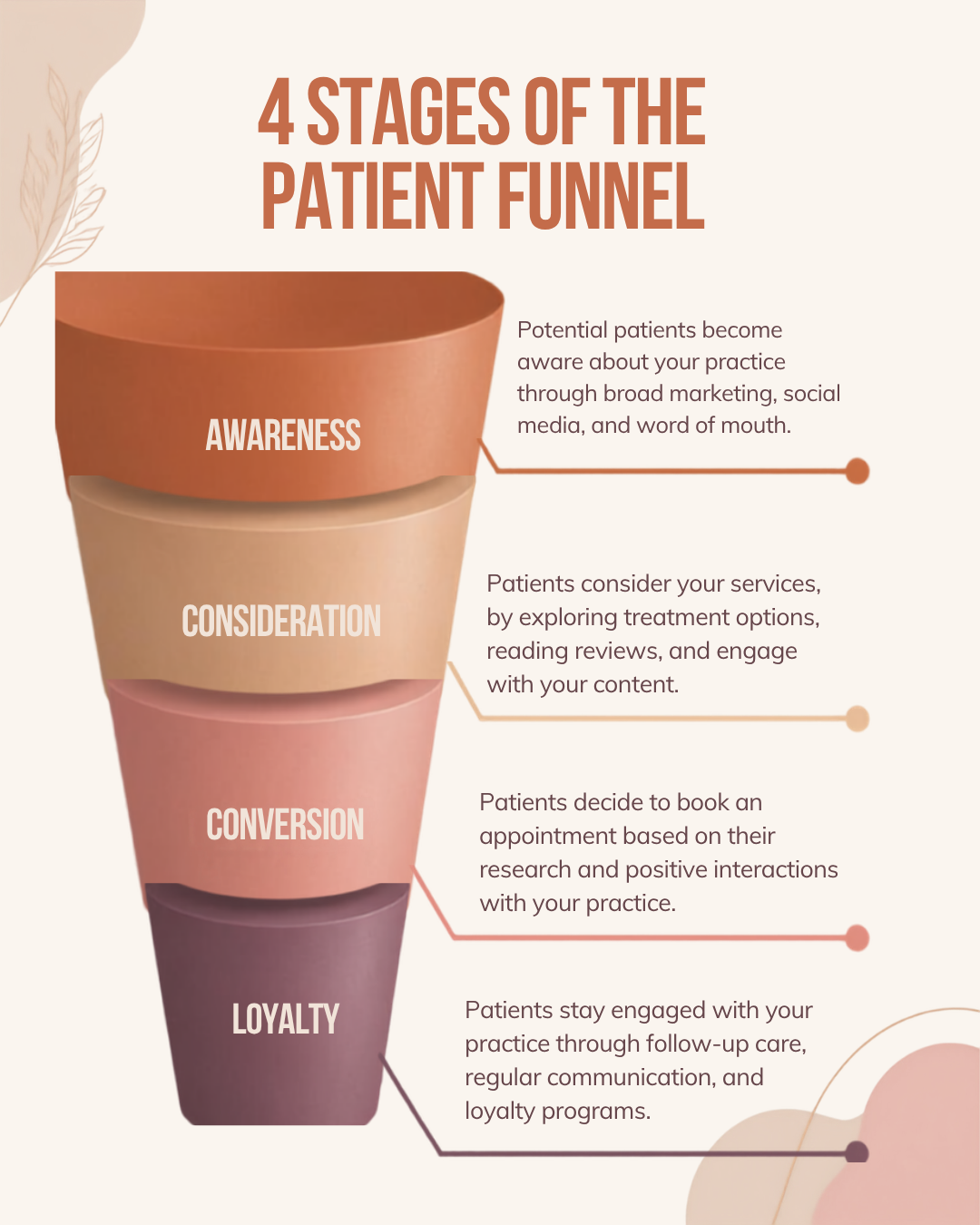
Awareness channels: Paid digital (social media and search), Google business profile, physical signage are examples of how patients can learn that you exist. The objective here isn't conversion right away, but to create an imprint so the next time a prospective patient comes across your name or practice, it triggers some familiarity.
Consideration channels: Website with services, testimonials, results, credentials along with positive reviews and referrals tilt the patient decision in your favor. This is where trust gets built and nudges the prospect to take action.
Conversion channels: Responsive email and phone correspondance, immaculate in-office experience and value-adding first consultations convert an interested prospect to a buyer. Probably one of the hardest stages in the funnel - where as a provider you don't want to come off as salesy, but demonstrating value without pressuring will lead to conversion.
Loyalty channels: Follow-up aftercare, referral incentives, longer-term care plan and of course achieving outcomes all contribute to building loyalty. Essential for specialties where chronic care or health maintenance is required, however equally important for more acute cases too, as this step will lead to word of mouth referrals.
Marketing effectively requires heavy decision-making and learning along the way, understanding that not everything might work - but tracking and course-correcting will yield demand for your services.